پژوهش‌های نوین در مطالعات علوم انسانی اسلامی

پژوهش‌های نوین در مطالعات علوم انسانی اسلامی

ارائه الگوی مدیریت عملکرد با رویکرد تحلیل گری داده منابع انسانی در سازمان های دولتی

نوع مقاله : مقاله پژوهشی

نویسندگان
1 دانشجوی دکتری، گروه مدیریت، واحد سنندج، دانشگاه آزاد اسلامی، سنندج، ایران
2 گروه مدیریت، دانشگاه ایلام، ایلام، ایران
3 گروه مدیریت، واحد سنندج، دانشگاه آزاد اسلامی، سنندج، ایران
10.22034/api.2026.2111453.2055
چکیده
هدف: پژوهش حاضر با هدف ارائة الگوی جامع مدیریت عملکرد با رویکرد تحلیل‌گری داده‌های منابع انسانی در سازمان‌های دولتی در ادارات کل بازرسی استان‌های غربی کشور انجام شده است.
روش پژوهش: این پژوهش از نظر هدف، کاربردی-توسعه‌ای و از نظر روش‌شناسی آمیختة اکتشافی است. در بخش کیفی، با استفاده از روش تحلیل مضمون و مصاحبة نیمه‌ساختاریافته با خبرگان و مدیران ارشد، شبکة مضامین شامل ابعاد شش‌گانه (شرایط علی، پیش‌ران‌های فناورانه و نسلی، قابلیت‌های تحلیلی، فرایندهای عملکردی داده‌محور، راهکارهای اجرایی، و پیامدهای سازمانی و فراسازمانی) شناسایی گردید. در بخش کمی، با استفاده از روش پیمایشی و پرسشنامة محقق‌ساخته، از نمونه‌ای آماری از کارکنان و مدیران تخصصی تحلیل شد. برای بررسی برازش مدل مفهومی از روش مدل‌سازی معادلات ساختاری استفاده گردید.
یافته‌ها: نتایج نشان داد که تمامی فرضیه‌های پژوهش تأیید شده‌اند؛ به‌طوری که عوامل علی و پیشران‌ها تأثیر مثبت و معناداری بر مقوله‌ها و راهکارهای اجرایی دارند، مقوله‌ها تأثیر قوی و مستقیمی بر راهکارهای اجرایی اعمال می‌کنند، موانع و چالش‌های ساختاری و فرهنگی اثر منفی و معناداری بر پیاده‌سازی راهکارهای اجرایی برجای می‌گذارند.
نتیجه‌گیری: در نهایت، الگوی بومی پیشنهادی می‌تواند با رفع سوگیری‌های ارزیابی، شفافیت اداری و تصمیم‌گیری مبتنی بر شواهد عینی، کارایی و سلامت اداری را در سازمان‌های دولتی به شکل چشمگیری ارتقا بخشد.

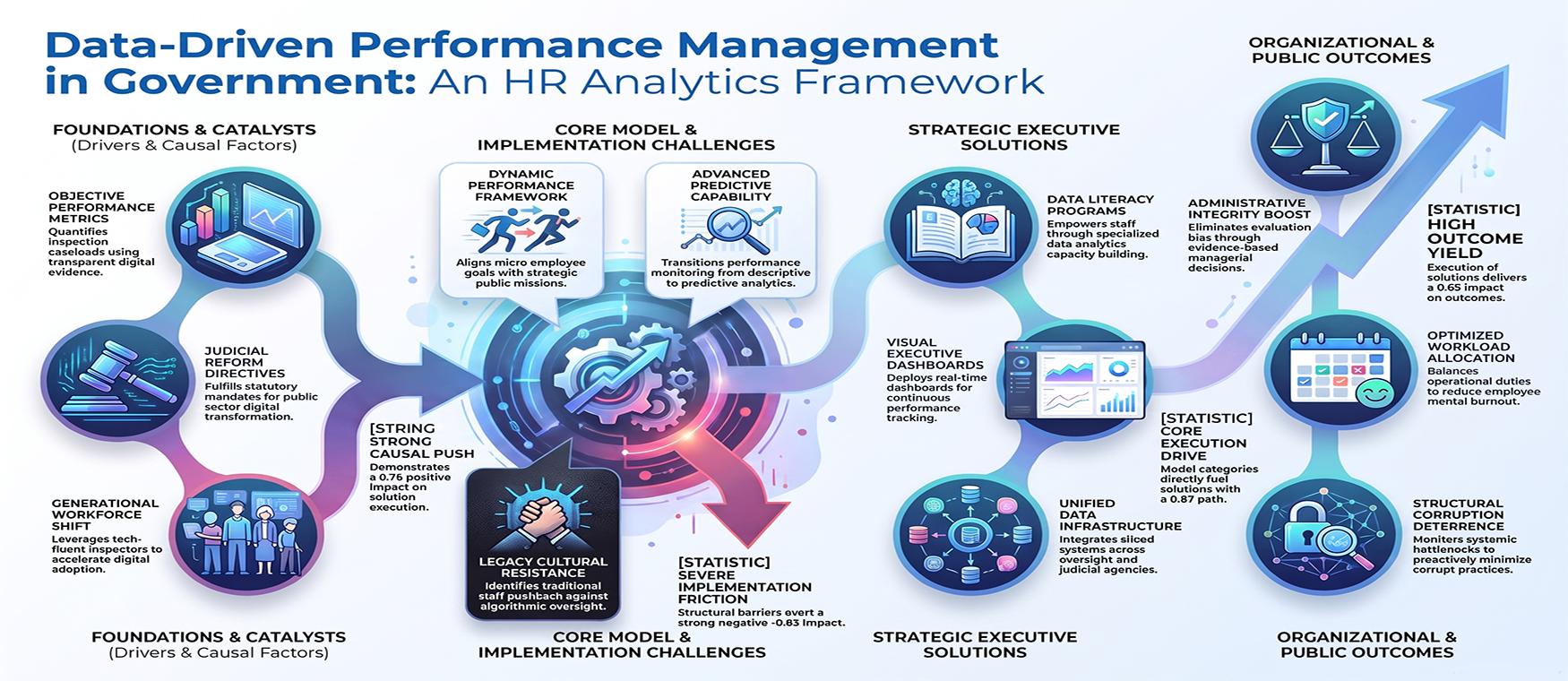
چکیده تصویری

ارائه الگوی مدیریت عملکرد با رویکرد تحلیل گری داده منابع انسانی در سازمان های دولتی
کلیدواژه‌ها
موضوعات

عنوان مقاله English

Presenting a Performance Management Model with a Human Resource Data Analytics Approach in Public Sector Organizations

نویسندگان English

Mohammad Javad Nowrozi 1
Mohammad aidi 2
Kumars Ahmadi 3
1 PhD Student, Department of Management, IAUSDJ, Islamic Azad University, Sanandaj, Iran
2 Department of Management, University of Ilam, Ilam, Iran
3 Department of Management, IAUSDJ, Islamic Azad University, Sanandaj, Iran
چکیده English

Objective: The present study was conducted with the aim of presenting a comprehensive model of performance management with a human resource data analytics approach in government organizations, specifically in the General Inspection Offices of the western provinces of the country.
Method: This study is applied-developmental in terms of objective and exploratory mixed-methods in terms of methodology. In the qualitative phase, employing thematic analysis and semi-structured interviews with experts and senior managers, the thematic network comprising six dimensions (causal conditions, technological and generational drivers, analytical capabilities, data-driven performance processes, executive solutions, and organizational and extra-organizational consequences) was identified. In the quantitative phase, using a survey method and a researcher-made questionnaire, a statistical sample of employees and specialized managers was analyzed. Structural equation modeling was employed to examine the fit of the conceptual model.
Results: The results indicated that all research hypotheses were confirmed, such that causal factors and drivers exert a positive and significant effect on the categories and executive solutions; the categories exert a strong and direct effect on executive solutions; and structural and cultural barriers and challenges leave a negative and significant effect on the implementation of executive solutions.
Conclusions: Ultimately, the proposed indigenous model can, by eliminating evaluation biases, administrative transparency, and evidence-based decision-making, significantly enhance efficiency and administrative integrity in government organizations.

کلیدواژه‌ها English

Performance Management
Human Resources Data Analytics
Public Organizations
Administrative Health
Data-Driven Decision-Making
ابراهیمی، الهام، و اسماعیلی مهیاری، مصطفی. (1402). سیر تحول و بنیان‌های فکری مفهومی پژوهش‌های حوزه تحلیل‌گری منابع انسانی. مطالعات منابع انسانی، 13(3).
انجمن مدیریت منابع انسانی ایران. (1404). تحلیل‌گری منابع انسانی. بازیابی‌شده از
آکادمی علوم داده ایران. (1403). تجزیه و تحلیل منابع انسانی. بازیابی‌شده از
بلیده، انور؛ یعقوبی، نورمحمد، و پورشهابی، وحید. (1403). ارائه الگوی پیاده‌سازی اثربخش مدیریت منابع انسانی سبز با رویکرد فراترکیب. مطالعات مدیریت توسعه سبز. https://doi.org/10.22077/jgdms.2024.7871.1164
پوراحمدی، معین؛ جعفری‌نیا، سعید؛ وکیلی، یوسف، و حسن‌پور، اکبر. (1404). الگوی نظام مدیریت منابع انسانی متناسب با نسل جدید Z در سازمان‌های اجرایی. مدیریت دولتی، 17(1), 75–121.
جاب‌ویژن. (1403). گزارش مدیران منابع انسانی. بازیابی‌شده از https://jobvision.ir/reports/hr-managers 
کنفرانس ملی مدیریت، اقتصاد و حسابداری. (1403). ارائه چارچوبی برای شناسایی عوامل کلیدی موفقیت تحلیل‌گری منابع انسانی.
معدنی، جواد؛ حافظی‌فر، عبدالرسول، و ابراهیم‌پور، حبیب. (1402). مدیریت منابع انسانی دانش‌محور در سازمان‌های دولتی. مدیریت منابع انسانی پایدار، 6(11), 215–241.
 
 
Boledeh, A., Yaghoubi, N., & Pourshahabi, V. (2024). Developing an effective green human resource management implementation framework: A meta-synthesis approach. Journal of Green Development Management Studies. doi.org/10.22077/jgdms.2024.7871.1164
Ebrahimi, E., & Esmaeili Mahyari, M. (2023). Evolution and intellectual-conceptual foundations of research in the field of human resources analytics. Journal of Human Resource Studies, 13(3). [Article link]
Fernandez, S., & Moldogaziev, T. (2024). From intuition to evidence: The impact of HR analytics on employee engagement in government agencies. Public Administration Review, 84(2), 215–230.
Hamilton, R. H., & Sodeman, W. A. (2022). The questions we ask: Opportunities and challenges for using big data analytics to strategically manage human capital resources. Business Horizons, 63(1), 85–95.
Iran Data Science Academy. (2024). People analytics. Retrieved from irandataacademy.ir/people-analytics-maturity
Iranian Human Resource Management Association. (2025). Human resource analytics. Retrieved from hrmsociety.ir/product/%D8%AA%D8%AD%D9%84%DB%8C%D9%84-%DA%AF%D8%B1%DB%8C-%D9%85%D9%86%D8%A7%D8%A8%D8%B9-%D8%A7%D9%86%D8%B3%D8%A7%D9%86%DB%8C
JobVision. (2024). HR managers report. Retrieved from jobvision.ir/reports/hr-managers
Madani, J., Hafezifar, A., & Ebrahimpour, H. (2023). Knowledge-based human resource management in government organizations. Sustainable Human Resource Management, 6(11), 215–241.
Marler, J. H., & Boudreau, J. W. (2023). Predictive performance management: Leveraging big data for human capital strategy. International Journal of Human Resource Management, 34(5), 1012–1035.
McCartney, S., Murphy, C., & McCarthy, J. (2021). 21st century HR: A competency model for the emerging role of HR analysts. Personnel Review, 50(6), 1595–1614.
National Conference on Management, Economics and Accounting. (2024). Presenting a framework for identifying key success factors of human resource analytics. civilica.com/doc/2087954
Peeters, T., Paauwe, J., & Van De Voorde, K. (2020). HR analytics value chain in public organizations. Human Resource Management Journal, 30(4), 543–568.
Pourahmadi, M., Jafarinia, S., Vakili, Y., & Hasanpour, A. (2025). A model of the human resource management system compatible with Generation Z in executive organizations. Journal of Public Administration, 17(1), 75–121.
Saka, A. B., Chan, D. W., & Siu, F. M. (2025). AI-driven performance management in the public sector: A framework for ethical implementation. Government Information Quarterly, 42(1), 101–118.
Tursunbayeva, A., Di Lauro, S., & Pagliari, C. (2023). People analytics in the public sector: A review and research agenda. Public Money & Management, 43(3), 221–230.