پژوهش‌های نوین در مطالعات علوم انسانی اسلامی

پژوهش‌های نوین در مطالعات علوم انسانی اسلامی

تصویر امام مهدی (عج) و کارکرد انتظار در اشعار ملا محسن فیض کاشانی

نوع مقاله : مقاله پژوهشی

نویسنده
گروه زبان و ادبیات فارسی، واحد خرم‌آباد،دانشگاه آزاد اسلامی،خرم‌آباد، ایران
10.22034/api.2026.2109652.2012
چکیده
هدف: اندیشه مهدوی و منجی‌باوری از مؤلفه‌های بنیادین در تفکر کلامی، عرفانی و ادبی شیعه است که بازتاب آن در شعر فارسی، ابعاد زیباشناختی و عاطفی ویژه‌ای می‌یابد. ملا محسن فیض کاشانی، از برجسته‌ترین متفکران و مراجع عهد صفوی، در اثر منظوم خود با عنوان «شوق مهدی»، این آموزه را با لحنی شورمندانه و برگرفته از سنت غزل‌سرایی ایرانی تبیین کرده است. بررسی این اثر از آن جهت ضروری است که پیوند میان اندیشة کلامی مهدویت و تجربة ادبی و عاطفی آن را در یکی از مهم‌ترین دوره‌های تاریخ تشیع آشکار می‌سازد.
روش پژوهش: این پژوهش با روش توصیفی-تحلیلی و با تکیه بر خوانش نزدیک متن غزل‌های فیض کاشانی و بهره‌گیری از منابع معتبر مهدویت و عرفان اسلامی، به بررسی بازتاب اندیشه مهدوی، مفهوم انتظار، غیبت، ظهور و امید به دگرگونی روزگار در شعر وی می‌پردازد. این روش امکان تحلیل نظام معنایی و ساختار عاطفی شعر فیض را در پرتو مبانی کلامی و عرفانی فراهم می‌سازد.
یافته‌ها: یافته‌های پژوهش نشان می‌دهد که انتظار در شعر فیض، جریانی منفعلانه نبوده، بلکه تجربه‌ای عاطفی و امیدبخش است که شاعر از خلال تقابل‌های معنایی چون رنج فراق و نشاط وصال، تاریکیِ زمانه و طلوع صبح ظهور، به تصویر کشیده است. این تقابل‌ها حاکی از آن است که انتظار در اندیشة فیض، سازوکاری شناختی-عاطفی برای تاب‌آوری در برابر ناامیدی و بی‌عدالتی است.
نتیجه‌گیری: در این ساختار، امام مهدی (عج) نه تنها مظهر عدل موعود، بلکه تکیه‌گاه روحی سالک در روزگار آشفتگی است و شعر وی پلی میان معرفت کلامی و تجربه زیستهٔ انتظار می‌سازد. بر این اساس، «شوق مهدی» را می‌توان نمونه‌ای برجسته از ادبیات انتظار دانست که در آن، آموزهٔ کلامی به تجربة زیبایی‌شناختی و عاطفی بدل می‌شود.

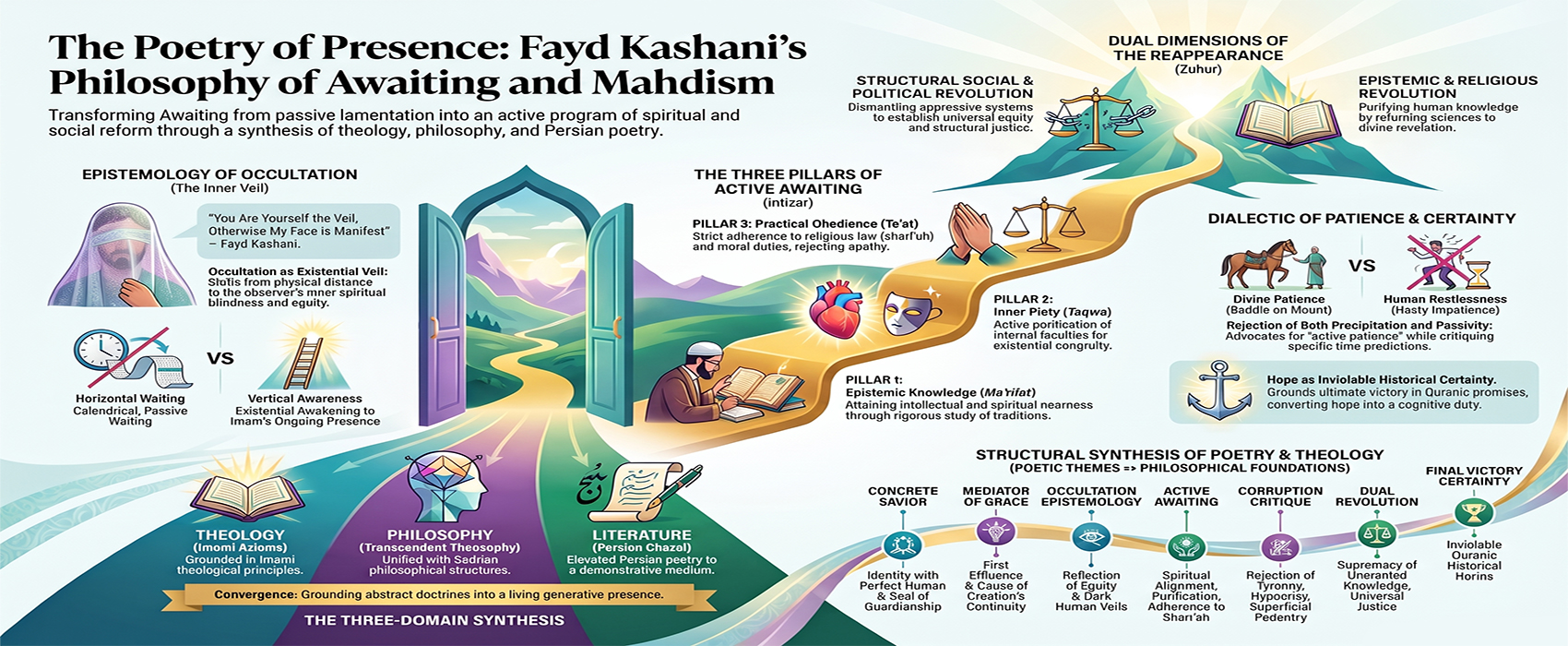
چکیده تصویری

تصویر امام مهدی (عج) و کارکرد انتظار در اشعار ملا محسن فیض کاشانی
کلیدواژه‌ها
موضوعات

عنوان مقاله English

Image of Imam Mahdi (AS) and the Function of Anticipation in the Poetry of Mulla Muhsin Fayd Kashani

نویسنده English

Saeideh Saki Entezami
Department of Persian Laguage and Literature,Khor.C.,Islamic Azad University, Khorramabad, Iran.
چکیده English

Objective: The Mahdist idea and messianism are among the fundamental components of Shi''i theological, mystical, and literary thought, whose reflection in Persian poetry acquires distinctive aesthetic and emotional dimensions. Mulla Muhsin Fayd Kashani, one of the most prominent thinkers and authorities of the Safavid era, has expounded this doctrine in his versified work entitled Shawqi Mahdi (Longing for the Mahdi) with an impassioned tone derived from the Persian ghazal tradition. The examination of this work is necessary in that it reveals the nexus between the theological doctrine of Mahdism and its literary and emotional experience during one of the most significant periods of Shii history.
Method: This study, employing a descriptive-analytical method and relying upon a close reading of the text of Fayd Kashani''s ghazals and drawing upon authoritative sources on Mahdism and Islamic mysticism, examines the reflection of the Mahdist idea, the concept of awaiting (intizar), occultation (ghaybat), reappearance (zuhur), and hope for the transformation of the age in his poetry. This method facilitates the analysis of the semantic system and emotional structure of Fayd''s poetry in light of theological and mystical foundations.
Results: The findings indicate that awaiting in Fayd''s poetry is not a passive current; rather, it is an emotional and hopeinspiring experience that the poet has depicted through semantic antitheses such as the suffering of separation and the joy of union, the darkness of the age and the dawn of the reappearance. These antitheses suggest that awaiting in Fayd''s thought constitutes a cognitive-emotional mechanism for resilience against despair and injustice.
Conclusion: Within this structure, Imam Mahdi (may God hasten his reappearance) is not merely the manifestation of the promised justice but also the spiritual mainstay of the wayfarer in times of turmoil, and his poetry constructs a bridge between theological knowledge and the lived experience of awaiting. Accordingly, Shawqi Mahdi may be regarded as a prominent example of the literature of awaiting, in which the theological doctrine is transformed into an aesthetic and emotional experience.

کلیدواژه‌ها English

Mulla Muhsin Fayd Kashani
Shouq-e Mahdi
Mahdism
Anticipation
Persian Poetry
قرآن کریم.
برنجکار، رضا. (۱۳۸۲). معرفت‌شناسی دینی. قم: انتشارات طه.
تمیم‌داری، احمد. (۱۳۷۲). تاریخ ادب عرفانی در ایران. تهران: انتشارات سروش.
حکیمی، محمدرضا. (۱۳۷۵). مکتب تفکیک. تهران: دلیل ما.
راستگو، سیدمحمد. (۱۳۷۶). مبانی انتظار و مهدویت در ادب فارسی. تهران: نشر ذکر.
رضوانی، علی‌اصغر. (۱۳۸۶). موعودشناسی و پاسخ به شبهات (جلد ۱ و ۲). قم: انتشارات مسجد مقدس جمکران.
رضوانی، علی‌اصغر. (۱۳۸۸). امام مهدی (عج) در کلام و عرفان. قم: بوستان کتاب.
صافی گلپایگانی، لطف‌الله. (۱۳۷۵). منتخب‌الاثر فی الامام الثانی عشر (ع). تهران: مکتبه‌الصدوق.
صادقی ارزگانی، محمد. (۱۳۸۲). امام مهدی از دیدگاه اهل سنت و امامیه. تهران: انتشارات بین‌المللی الهدی.
طبرسی نوری، میرزا حسین. (۱۳۸۷). النجم الثاقب فی احوال الامام الغائب (ترجمهٔ سید ابراهیم سیدعلوی). قم: مسجد مقدس جمکران.
طباطبائی، سیدمحمدحسین. (۱۳۸۷). شیعه در اسلام. قم: بوستان کتاب.
طهرانی، آقا بزرگ. (بی‌تا). الذریعة الی تصانیف الشیعة. بیروت: دارالاضواء.
عسگری، سید مرتضی. (۱۳۸۰). مهدویت و اسلام. تهران: منیر.
فیض کاشانی، ملا محسن. (۱۳۸۲). کلیات اشعار ملا محسن فیض کاشانی (به اهتمام مصطفی فیضی). تهران: انتشارات اسوه.
فیض کاشانی، ملا محسن. (۱۳۸۶). زاد السالک. تهران: انتشارات حکمت.
فیض کاشانی، ملا محسن. (۱۳۹۳). علم‌الیقین (ترجمهٔ حسین استادولی). تهران: انتشارات حکمت.
فیض کاشانی، ملا محسن. (۱۳۹۵). الفت‌نامه. قم: کتابستان معرفت.
فیض کاشانی، ملا محسن. (۱۳۹۶). کلیات اشعار (چاپ سنایی). تهران: انتشارات سنایی.
فیض کاشانی، ملا محسن. (۱۴۰۲). شوق مهدی (مجموعه اشعار مهدوی). قم: انتشارات گنجور / منشورات معارف.
موحدیان عطار، علی. (۱۳۸۸). تصوف و مهدویت. تهران: انتشارات دانشگاه ادیان و مذاهب.
مطهری، مرتضی. (۱۳۷۹). قیام و انقلاب مهدی (عج) از دیدگاه فلسفة تاریخ. تهران: انتشارات صدرا.
نصیری، علی. (۱۳۸۵). حدیث پایداری؛ پژوهشی در ابعاد غیبت و انتظار. تهران: انتشارات سازمان تبلیغات اسلامی.
یثربی، سیدیحیی. (۱۳۸۴). عرفان نظری؛ بررسی و نقد تصوف و عرفان اسلامی. قم: بوستان کتاب.


Askari, S. M. (2001). Mahdism and Islam. Monir.
Berenjkar, R. (2003). Religious epistemology. Taha Publications.
Fayz Kashani, M. M. (2003). Complete poems of Mulla Mohsen Fayz Kashani (M. Fayzi, Ed.). Osweh Publications.
Fayz Kashani, M. M. (2007). Zad al-salik. Hekmat Publications.
Fayz Kashani, M. M. (2014). Ilm al-yaqin (H. Ostadvali, Trans.). Hekmat Publications.
Fayz Kashani, M. M. (2016). Alfat-nameh. Ketabestane Marefat.
Fayz Kashani, M. M. (2017). Complete poems (Sanai ed.). Sanai Publications.
Fayz Kashani, M. M. (2023). Shawqe Mahdi: Collection of Mahdavi poems. Ganjur Publications / Maaref Publications.
Hakimi, M. R. (1996). The school of separation (Maktabe Tafkik). Dalile Ma.
Motahhari, M. (2000). The uprising and revolution of the Mahdi (AS) from the perspective of the philosophy of history. Sadra Publications.
Movahedian Attar, A. (2009). Sufism and Mahdism. University of Religions and Denominations Publications.
Nasiri, A. (2006). The hadith of endurance: A study on the dimensions of occultation and expectation. Islamic Propagation Organization Publications.
The Holy Quran.
Rastgoo, S. M. (1997). Foundations of expectation and Mahdism in Persian literature. Nashre Zekr.
Rezvani, A. A. (2007). Mahdism studies and answers to doubts (Vols. 1–2). Holy Mosque of Jamkaran Publications.
Rezvani, A. A. (2009). Imam Mahdi (AS) in theology and mysticism. Bustane Ketab.
Sadeghi Arzagani, M. (2003). Imam Mahdi from the perspective of Sunnis and Imamis. International Al-Hoda Publications.
Safi Golpaygani, L. (1996). Muntakhab al-athar fi alimam al-thani ashar (AS). Maktabat al-Saduq.
Tabarsi Nuri, M. H. (2008). Al-najm al-thaqib fi ahwal alimam al-ghaib (S. I. Seyed Alavi, Trans.). Holy Mosque of Jamkaran.
Tabatabai, S. M. H. (2008). Shia in Islam. Bustane Ketab.
Tamimdari, A. (1993). History of mystical literature in Iran. Soroush Publications.
Tehrani, A. B. (n.d.). Al-dhariah ila tasanif al-Shiah. Dar al-Adwa.
Yathribi, S. Y. (2005). Theoretical mysticism: Examination and critique of Islamic Sufism and mysticism. Bustane Ketab.