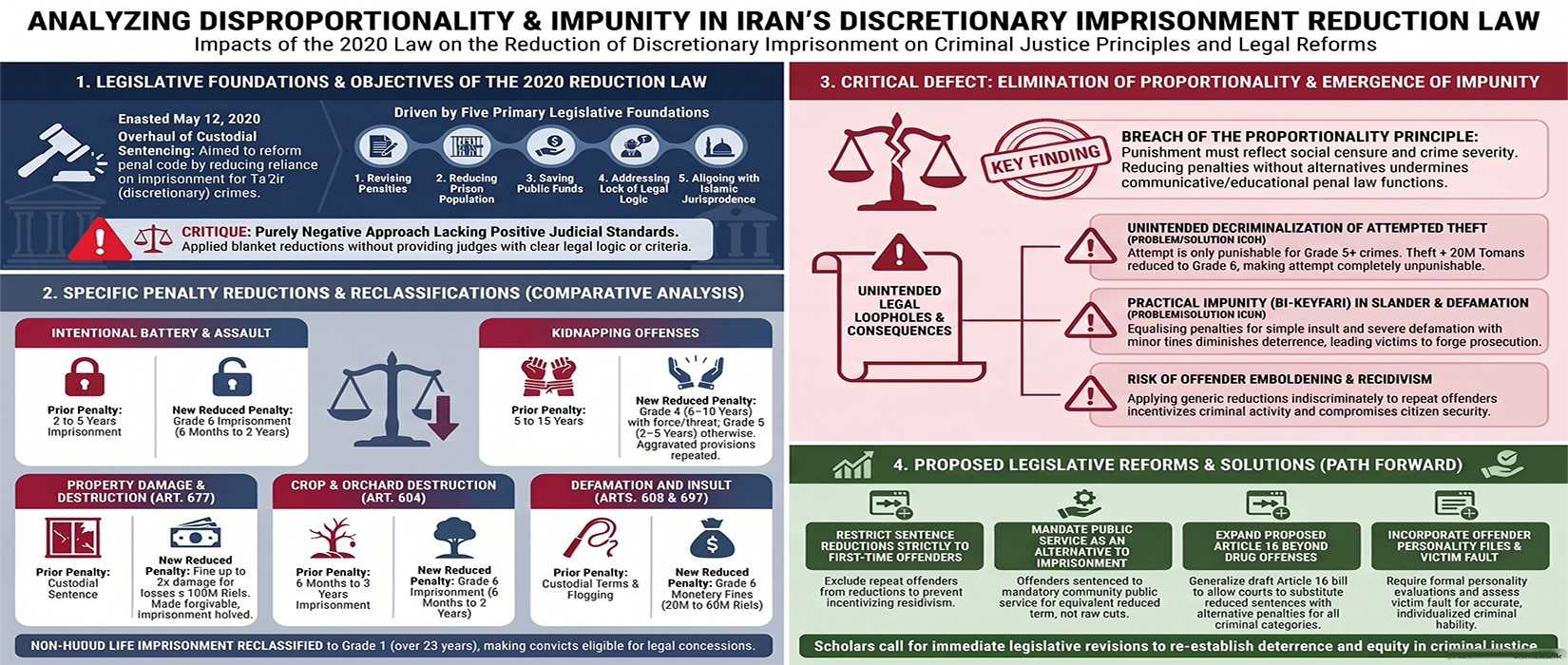
احمدزاده، رسول و تام، مجتبی. (1400). ملاحظاتی دربارۀ قانون کاهش مجازات حبس تعزیری (چاپ سوم). تهران: مرکز مطبوعات و انتشارات قوه قضائیه.
امیرارجمند، اردشیر. (1381). مجموعهی اسناد بینالمللی حقوق بشر (جلد اول). تهران: انتشارات دانشگاه شهید بهشتی.
باختر، سیداحمد. (1400). تحلیل کاربردی قانون کاهش مجازات حبس تعزیری. تهران: خط سوم.
توجهی، عبدالعلی و ابراهیموند، حسام. (1393). لزوم استفاده محدود از کیفر سالب آزادی بر مبنای فقه اسلامی. مجله دیدگاههای حقوق قضایی، ۱۹(۶۸), ۷۹-۱۰۸.
جزایری فارسانی، محسن و جلیلی پیرانی، محسن. (۱۳۹۹). نگاه پیشگیرانه به جرائم افترا و توهین با رویکرد انتقادی به قانون کاهش مجازات حبس تعزیری. مطالعات حقوق، (۱۳).
جعفری لنگرودی، محمدجعفر. (۱۳۹۴). ترمینولوژی حقوق (چاپ بیست و هفتم). تهران: نشر گنج دانش.
جواهری، ح. (۱۳۹۰). بررسی و تبعات مجازات حبس در نظام عدالت کیفری و اندیشههای جایگزین جریمههای بدل از حبس. علوم تربیتی، اصلاح و تربیت. (۱۱۲).
حاجیتبار فیروزجانی، حسن. (۱۳۹۳). مجازاتهای جایگزین حبس در حقوق کیفری ایران (چاپ اول). تهران: انتشارات فردوسی.
حجتیان، محبوبه. (۱۴۰۰). محشای قانون مجازات کاهش حبس تعزیری. تهران: دادبخش.
حسنی، محمدحسن، علیزاده، حمید، و پارسیپور، امید. (۱۳۹۹). بررسی تطبیقی آدمربایی در حقوق کیفری ایران و ایالات متحده آمریکا. پژوهشنامه حقوق تطبیقی, ۴(۲), ۳۸-۵۲. https://doi.org/10.22080/lps.2020.19320.1185
روستائی، مهرانگیز و رحمانیان، حامد. (۱۴۰۰). مدنیسازی حقوق کیفری در پرتو قانون کاهش مجازات حبس تعزیری. حقوقی دادگستری، ۸۵(۱۱۳). https://doi.org/10.22106/jlj.2021.137745.3724
سبزوارینژاد، حجت. (۱۳۹۶). جایگاه اصل تناسب جرم و مجازات در حقوق کیفری ایران و انگلستان. دو فصلنامه دیدگاههای حقوق قضایی، (۷۷ و ۷۸)، ۱۳۳-۱۶۴.
فلاحی، احمد. (۱۳۹۳). اصل ضرورت در جرمانگاری (چاپ اول). تهران: انتشارات دادگستر.
گرامی، حسین و فرهمند، مجتبی. (۱۳۹۹). جستاری در قانون کاهش مجازات حبس تعزیری مصوب ۲۳/۲/۱۳۹۹. فصلنامه آرا، ۱(۳).
میرزایی یزدی، زهرا و موسوی، سیداسماعیل. (۱۳۹۹). تاثیر قانون کاهش حبس تعزیری مصوب ۱۳۹۹ بر کیفرزدایی. قانون یار، ۴(۱۶).
میلکی، ایوب. (۱۳۸۵). حبسزدایی خردگرا؛ خروج از بحران تورم کیفری. اصلاح و تربیت، (۵۴).
Ahmadzadeh, R., & Tam, M. (2021). Considerations regarding the Law on the Reduction of Tazir Imprisonment Penalties (3rd ed.). Tehran: Judiciary Press and Publications Center.
Amir Arjomand, A. (2002). Collection of international human rights documents (Vol. 1). Tehran: Shahid Beheshti University Press.
Ashworth, A. (2015). Sentencing and criminal justice (Illustrated ed.). Cambridge University Press.
Bakhtar, S. A. (2021). Applied analysis of the Law on the Reduction of Tazir Imprisonment Penalties. Tehran: Khat-e Sevvom.
Dachak, H. (2021). The principle of proportionality of crime and punishment in international documents. International Journal of Multicultural and Multireligious Understanding, 8(4).
Fallahi, A. (2014). The principle of necessity in criminalization (1st ed.). Tehran: Dadgostar Publications.
Gerami, H., & Farahmand, M. (2020). An inquiry into the Law on the Reduction of Ta’zir Imprisonment Penalties approved on May 12, 2020. Ara Quarterly, 3(1).
Haji Tabar Firouzjani, H. (2014). Alternative punishments to imprisonment in Iranian criminal law (1st ed.). Tehran: Ferdowsi Publications.
Hasani, M. H., Alizadeh, H., & Parsipour, O. (2020). A comparative study of kidnapping in the criminal law of Iran and the United States of America. Comparative Law Research Journal, 4(2), 38–52. https://doi.org/10.22080/lps.2020.19320.1185
Hojjatiyan, M. (2021). Annotated Law on the Reduction of Tazir Imprisonment Penalties. Tehran: Dadbakhsh.
Horder, J. (2019). Ashworth’s principles of criminal law (9th ed.). Oxford University Press.
Hörnle, T., & Dubber, M. D. (Eds.). (2014). The Oxford handbook of criminal law. Oxford University Press.
Jafari Langroudi, M. J. (2015). Terminology of law (27th ed.). Tehran: Ganje Danesh.
Jareborg, N. (2004). Criminalization as last resort (ultima ratio). Ohio State Journal of Criminal Law, 2, 521–534.
Javaheri, H. (2011). Examination of the consequences of imprisonment in the criminal justice system and alternative ideas of fines in lieu of imprisonment. Educational Sciences, Correction and Rehabilitation, (112).
Jazayeri Farsani, M., & Jalili Pirani, M. (2020). A preventive perspective on the crimes of defamation and insult with a critical approach to the Law on the Reduction of Tazir Imprisonment Penalties. Legal Studies, (13).
Milki, A. (2006). Rational decarceration: Exiting the crisis of penal inflation. Correction and Rehabilitation, (54).
Mirzaei Yazdi, Z., & Mousavi, S. E. (2020). The impact of the Law on the Reduction of Ta’zir Imprisonment Penalties of 2020 on decriminalization. Qanun Yar, 4(16).
Molan, M. (2013). Modern criminal law (5th ed.). Cavendish Publishing. (including reference to Packer)
Roustaei, M., & Rahmanian, H. (2021). Privatization of criminal law in light of the Law on the Reduction of Ta’zir Imprisonment Penalties. Judiciary Law Journal, 85(113), 161–184. https://doi.org/10.22106/jlj.2021.137745.3724
Sabzevarinejad, H. (2017). The status of the principle of proportionality between crime and punishment in the criminal law of Iran and England. Judicial Legal Perspectives Quarterly, (77 & 78), 133–164.
Schunemann, B. (2004). The system of criminal wrongs: The concept of legal goods and victim-based jurisprudence as a bridge between the general and special parts of the criminal code. Buffalo Criminal Law Review, 7.
Tavajjohi, A., & Ebrahimvand, H. (2014). The necessity of limited use of custodial punishment based on Islamic jurisprudence. Judicial Legal Perspectives Quarterly, 19(68), 79–108.